
First computers in Lithuania: analog and digital
First computers in Lithuania, as they were called “electronic computing machines”, were produced at the Special Construction Bureau of the Factory of Computing Machines in Vilnius, in the early sixties. Three of them — EV80-3M, ESM Lt1, and Rūta — were digital machines; a fourth, EASP-S, was Lithuania’s first analog computer.
EV80-3M - the first computing machine assembled in Lithuania
EV80-3M was the first vacuum tube based electronic computing machine started to be assembled in Lithuania in 1960. The same year a new electronic manufactory was established at Vilnius Factory of Computing Machines. S. Aleskevicius was appointed as a chief of this unit. The whole team of specialists was transferred from another assembly unit to this unit, led by foreman A. Gudziunas. This team started assembling EV80-3M.
EV80-3M was a copy of another electronic computing machine IBM 604, which was created in the USA in 1948.
EV80-3M contained 1620 vacuum tubes and could perform a few arithmetic calculations: addition, subtraction, multiplication, division, and some logic operations - rounding, comparison, conditional transition. The machine had a decimal number system and could perform around 2000 addition operations per second.
The construction of EV80-3M was rather strange and quite poor by manufacturing standards: the whole electronics were “hanging” on the doors of the main frame, with a huge amount of wires coming from them. Each cell had a round shape, containing resistors and other electronic components. Printed circuit boards were not used in the construction of the machine.
Over 5 years, the team of specialists at the Vilnius Factory of Computing Machines assembled over 400 EV80-3M machines.
ESM Lt1 - the first digital computing machine designed in Lithuania
In 1959 the Special Construction Bureau (SCB) was established at the Factory of Computing Machines in Vilnius. The first specialist to join this bureau was Donaldas Zanevicius. At that time SCB had only two employees: director Antanas Nemeiksis and the chief accountant.
D. Zanevicius was appointed as chief of the electronic computing machines department. However, there was a need for specialists who understood the principles of computing machines - how to design and construct them. At that time, a handful of students at Kaunas Polytechnic Institute (KPI, now Kaunas University of Technology) had attended the first lectures on the subject and written diploma theses about electronic computing machines. D. Zanevicius was their lecturer and diploma supervisor, and invited several of these students to join him at SCB.
Seeing the weaknesses of EV80-3M, the team of specialists started designing and constructing a new, original vacuum tube based electronic computing machine, ESM Lt1, which was completed and successfully launched in 1961.
This machine was designed with the available vacuum tubes, diodes, resistors and other components in mind. A new case was designed and built, including the functional cells.
The following specialists were involved in the design and/or construction of ESM Lt1: D. Zanevicius, A. Gutauskas, J. Puodzius, V. Ramanauskas, L. Abraitis, also B. Bieliauskas, E. Paulauskas, A. Baskakovas, B. Sruogis, A. Stulgys, A. Petrauskas, K. Ramanauskas, G. Grigas, S. Girlevicius.
This was a defining exam for the team of constructors, showing they fully understood what a computer is and how it works. It was like defending a diploma thesis: proving that, given boxes of electronic components, they could design logical schemes and turn them into a working computing machine.
It was a great joy when the newly built ESM Lt1 was turned on successfully and correctly calculated two plus two equals four.
Mass production of ESM Lt1 was never started, as transistors had already been invented by then, and part of the constructors’ team soon moved on to developing this new technology in Lithuania. In parallel, the work started on a new computing machine - Rūta, Lithuania’s first mass-produced (and first transistor-based) computer, in 1962–1963.
EASP-S - the first ANALOG computer in Lithuania
Alongside these digital machines, SKB engineers also built a very different kind of machine in 1962: EASP-S, an electronic analyzer of stochastic (random) processes, used for correlation and spectral analysis of signals recorded optically or magnetically. Unlike EV80-3M, ESM Lt1, and later Rūta — all DIGITAL machines that represented numbers as discrete states inside vacuum tubes, and from Rūta onward transistors — EASP-S was Lithuania’s first ANALOG computer.
Instead of executing a program step by step, EASP-S worked with continuously varying voltages that directly represented the signal under study. Its circuits computed correlation and other functions continuously, producing results as a curve traced on a chart rather than a table of digits. The Vilnius factory’s own 1973 chronicle places EASP-S in a distinct category it called “analog machines", separate from its “digital" machines. EASP-S was produced in small numbers between 1964 and 1967.
Together, EV80-3M, ESM Lt1, and Rūta mark the beginning of digital computing in Lithuania — first vacuum-tube based, then transistor-based — while EASP-S stands apart as Lithuania’s first analog computer.
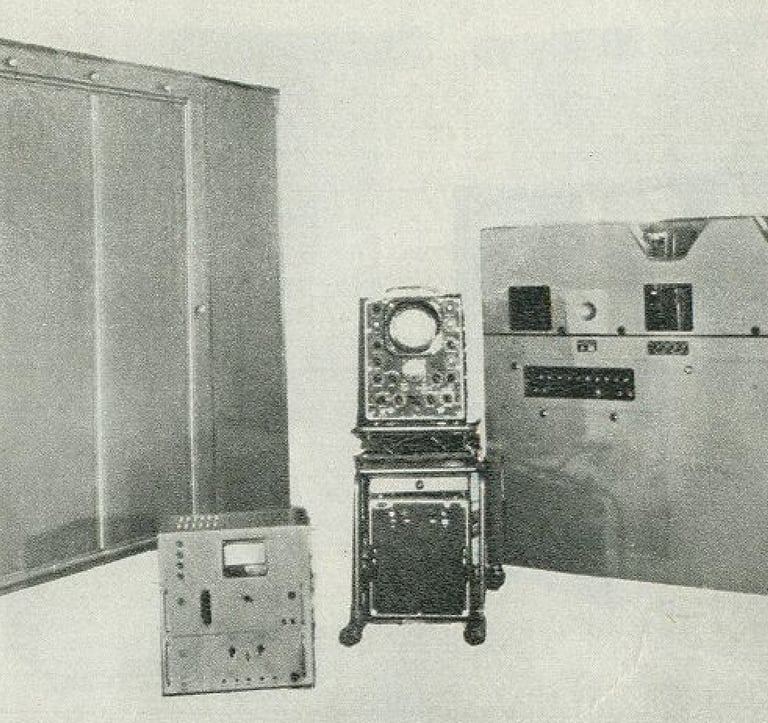
EV80-3M - the first vacuum tube based digital computing machine started to be assembled in Lithuania in 1960 at the Factory of Computing Machines in Vilnius.
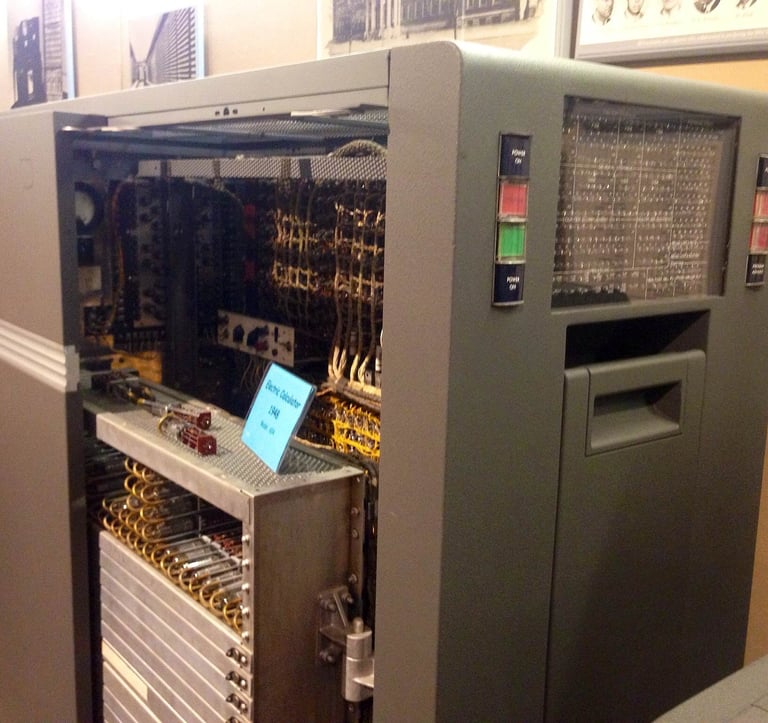
Electronic computing machine IBM 604, built in the USA in 1948.
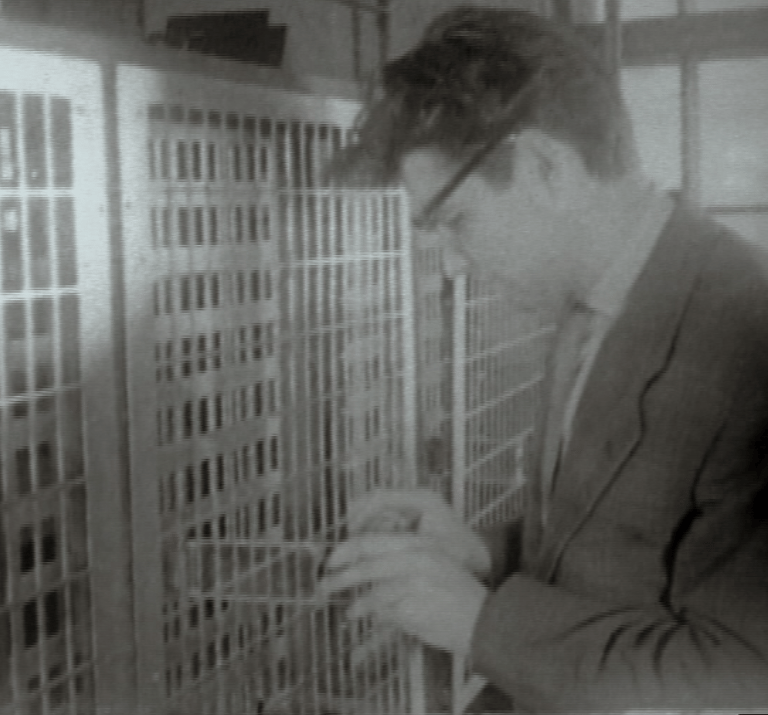
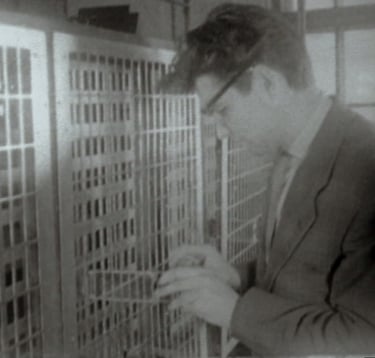
Donaldas Zanevicius at the first digital computing machine ESM Lt1 designed in Lithuania. Special Construction Bureau (SCB) at the Factory of Computing Machines in Vilnius. April 28th, 1961.
History / First computers in Lithuania: analog and digital


EASP-S - the first ANALOG computer built in Lithuania. Special Construction Bureau (SCB) at the Factory of Computing Machines in Vilnius, 1962.
Contact us
tamos.projects@gmail.com
© 2021-2026 Computers.lt